Indrajeet Patil
golden rules
for agentic engineering
Boost productivity without compromising quality
Source code for these slides can be found on GitHub. All illustrations in this presentation are AI-generated.
Audience
You ship production software
Tests, deployment, security, and maintenance matter.
Exception
Throwaway code
Relax engineering rigour for disposable code; retain safeguards for real data and real actions.
Caveat
No panacea
These are principles that sharpen judgement, not a magic recipe.
On the risks of real actions, see The lethal trifecta for AI agents (Willison) and Excessive agency (OWASP).
01
Measure the whole job
02
DevEx = AgentEx
03
Define done before delegating
04
Scope control
05
Bound the blast radius
06
Guardrails
07
Session hygiene
08
Know thy tools
09
Meta-automation
10
Be curious. Be humble. Be kind.
Choose the simplest approach that improves time to an accepted result.
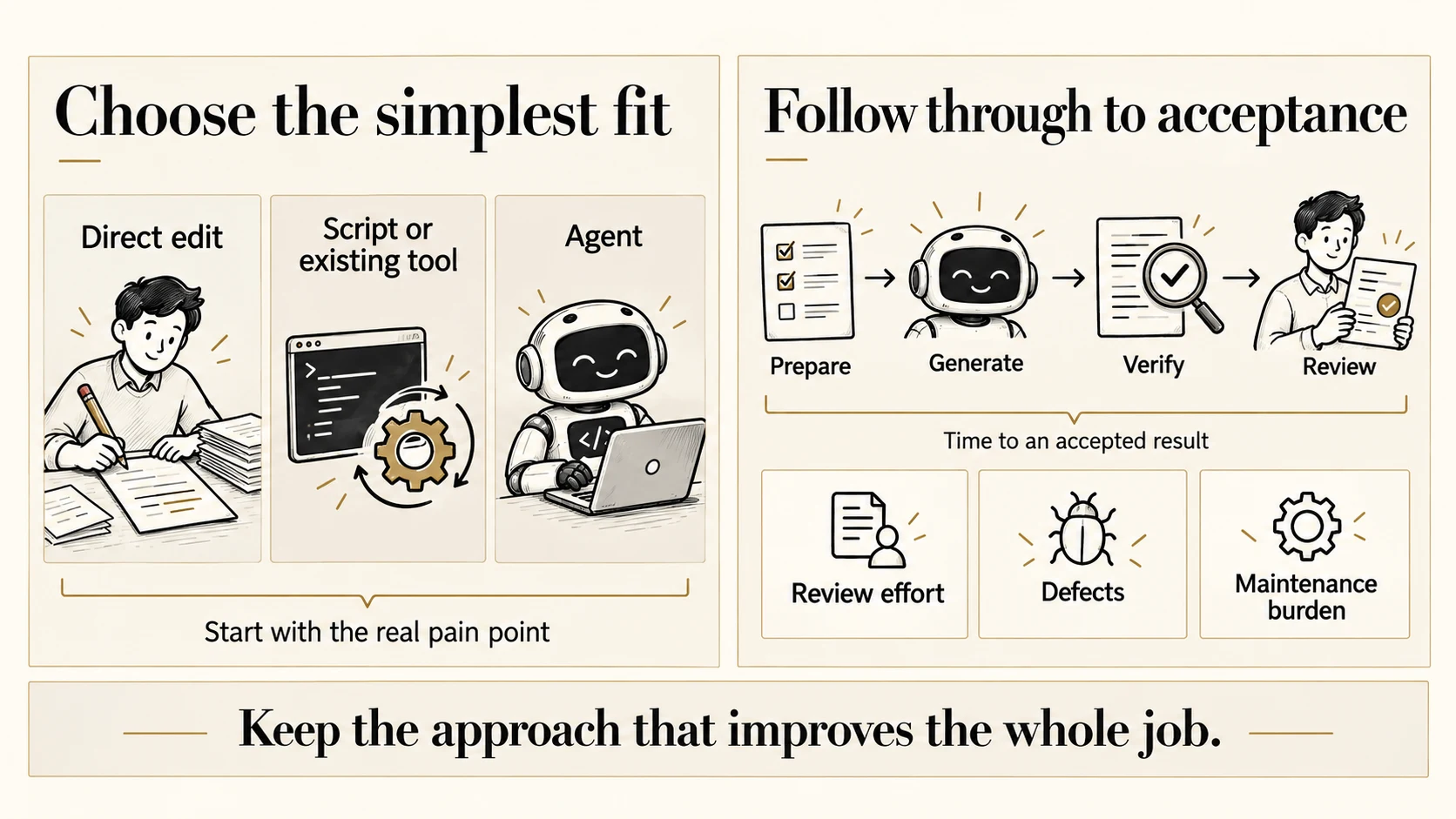
Simplest-solution principle: Building effective agents (Anthropic). The whole-job measures are practical recommendations for coding work.
If humans hunt for context, agents burn tokens too.
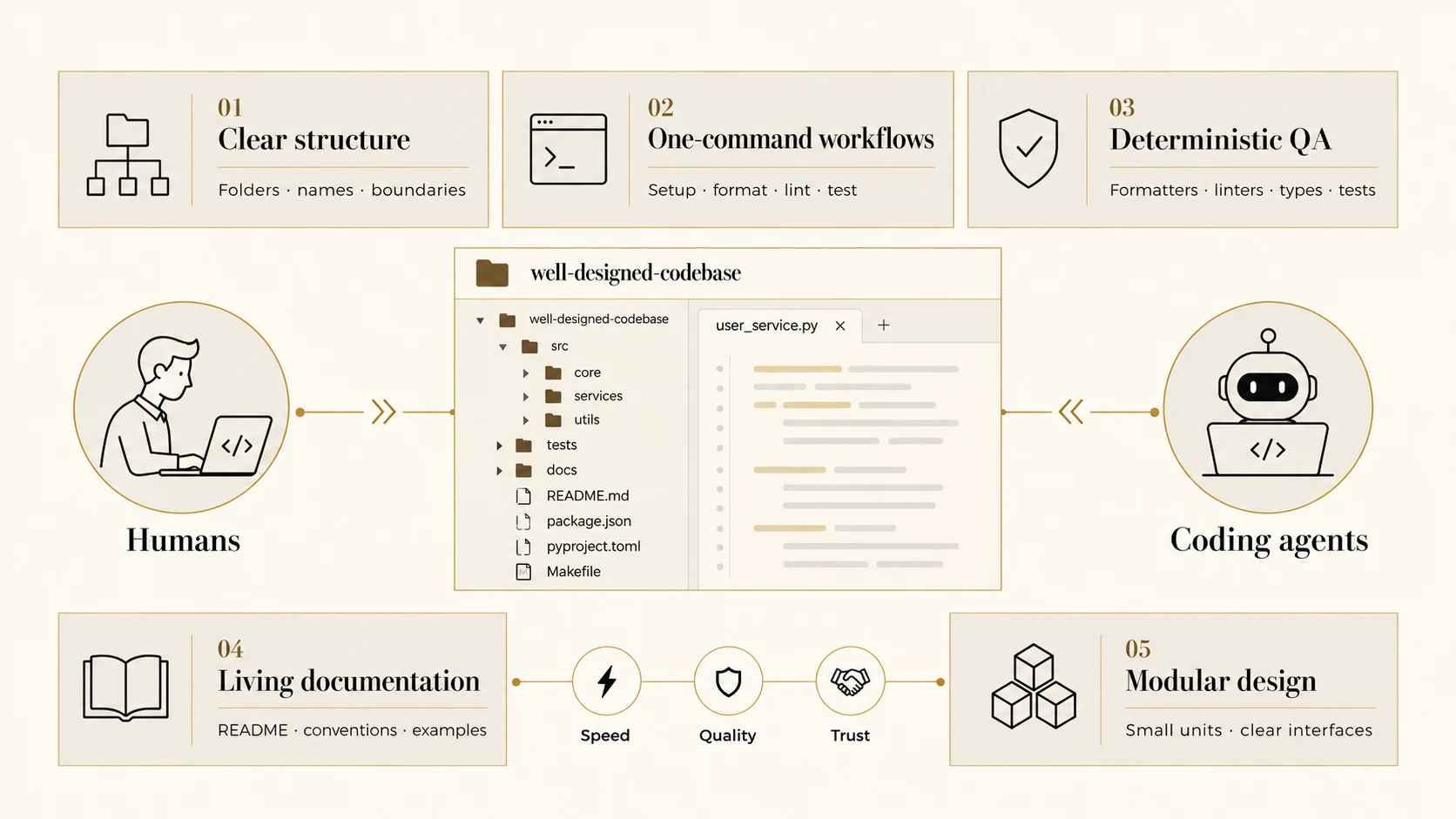
One setup command. The same starting point for humans and agents.
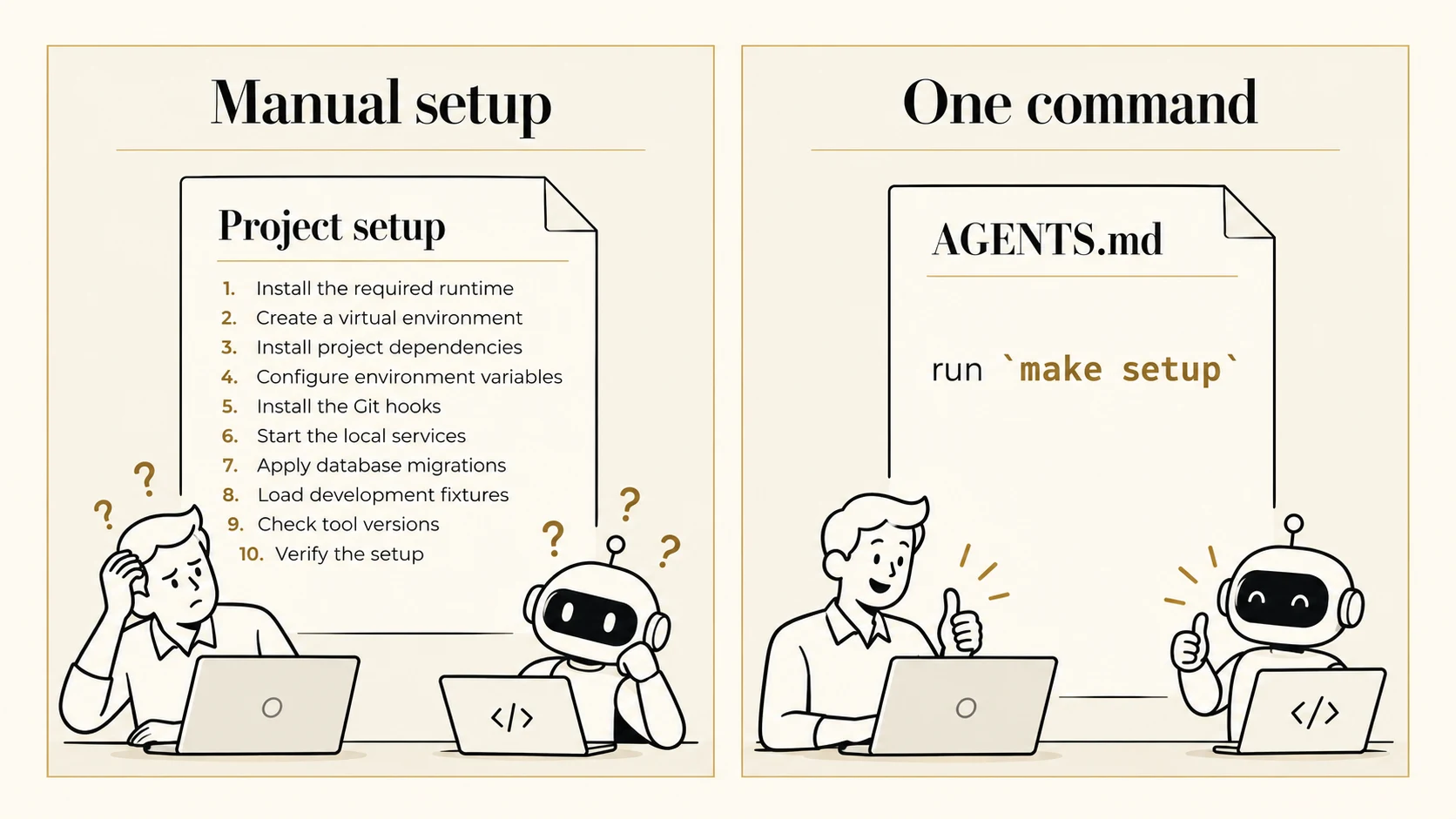
See the AGENTS.md convention.
State the outcome, what must stay unchanged, and the evidence that will show it works.
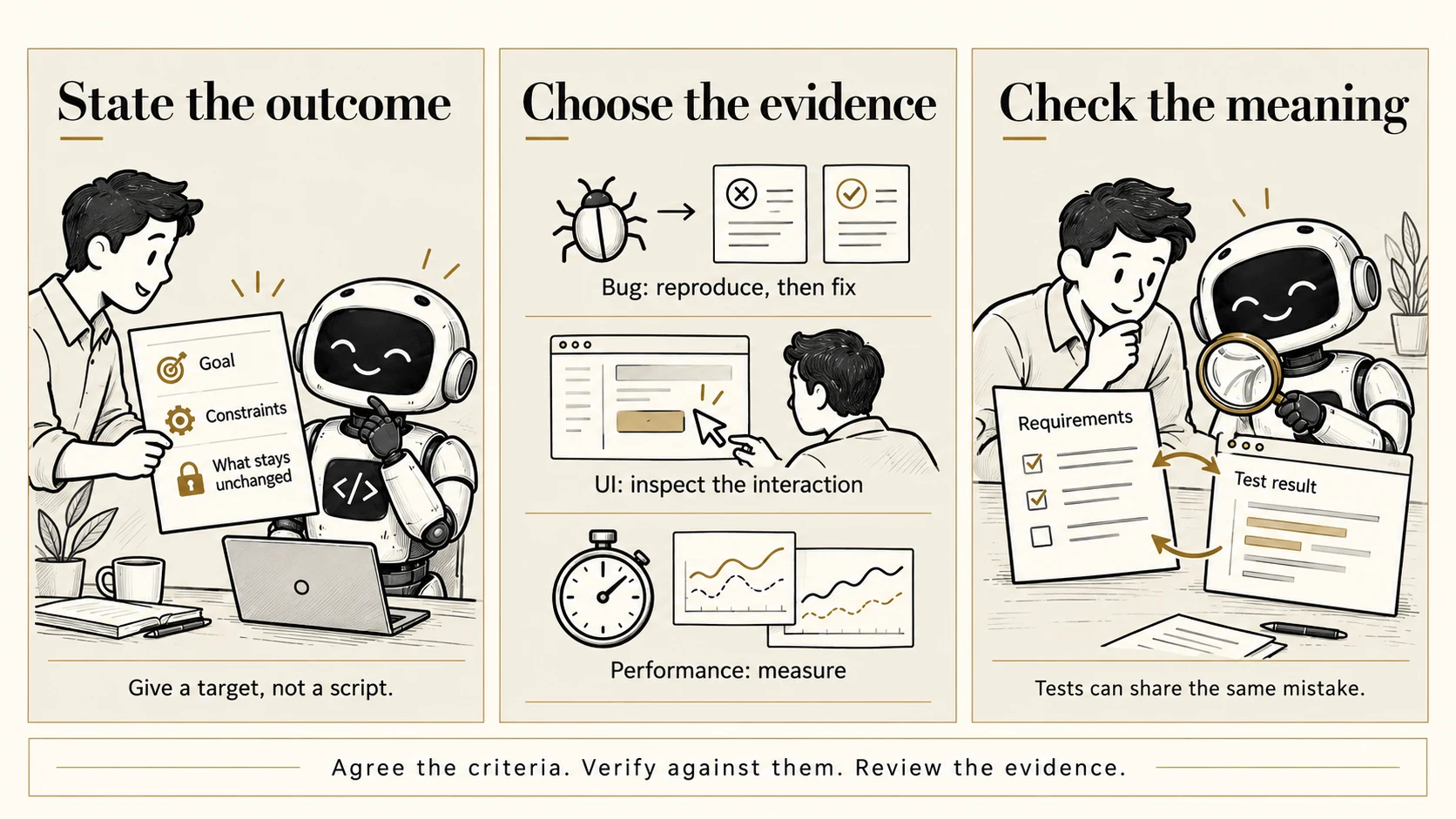
On specifying success and grading outcomes rather than paths, see Demystifying evals for AI agents (Anthropic).
Bug fix
Reproduce the failure. Show the same case succeeding after the fix, and check relevant unchanged behaviour.
UI change
Inspect the rendered interaction, including relevant keyboard and responsive states. A build alone cannot show this.
Performance
Measure before and after under comparable conditions. State the workload and trade-offs.
Check the meaning of the tests. Implementation and assertions can agree with each other while missing the requirement.
Bug and UI checks adapted from Claude Code best practices (Anthropic).
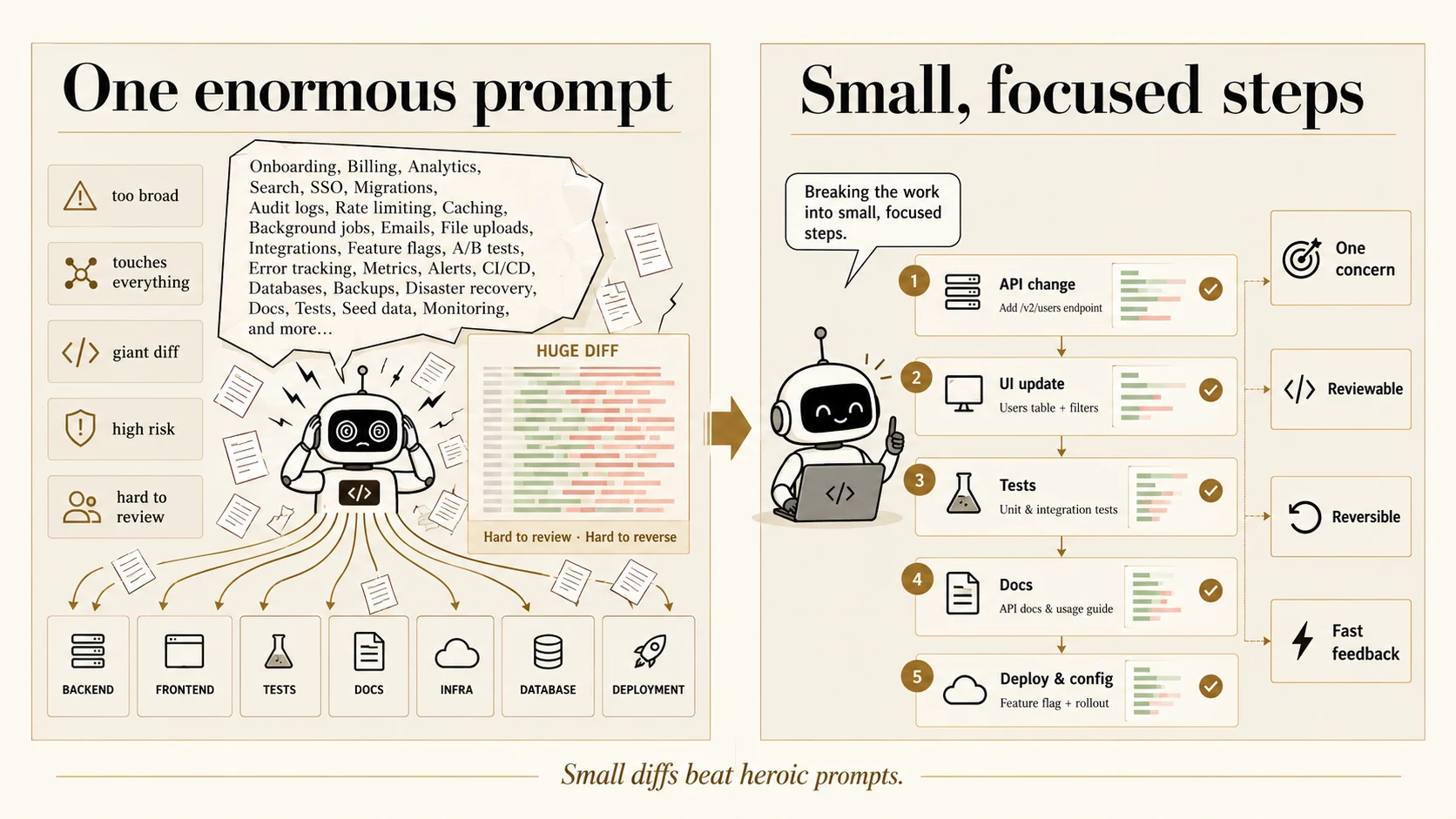
Small diffs beat heroic prompts.

Why
Agents can produce changes faster than reviewers can assess them. Keep each change within review capacity.
How
Prefer narrow tasks: one bug, one refactor, one test gap, one migration step. Each chunk should be reviewable, testable, and revertible on its own.
When the agent discovers broader issues, capture them as follow-up tasks instead of expanding the current change indefinitely.
See Small CLs (Google Engineering Practices).
Limit what the agent can read, change, and execute; agree which actions need approval.
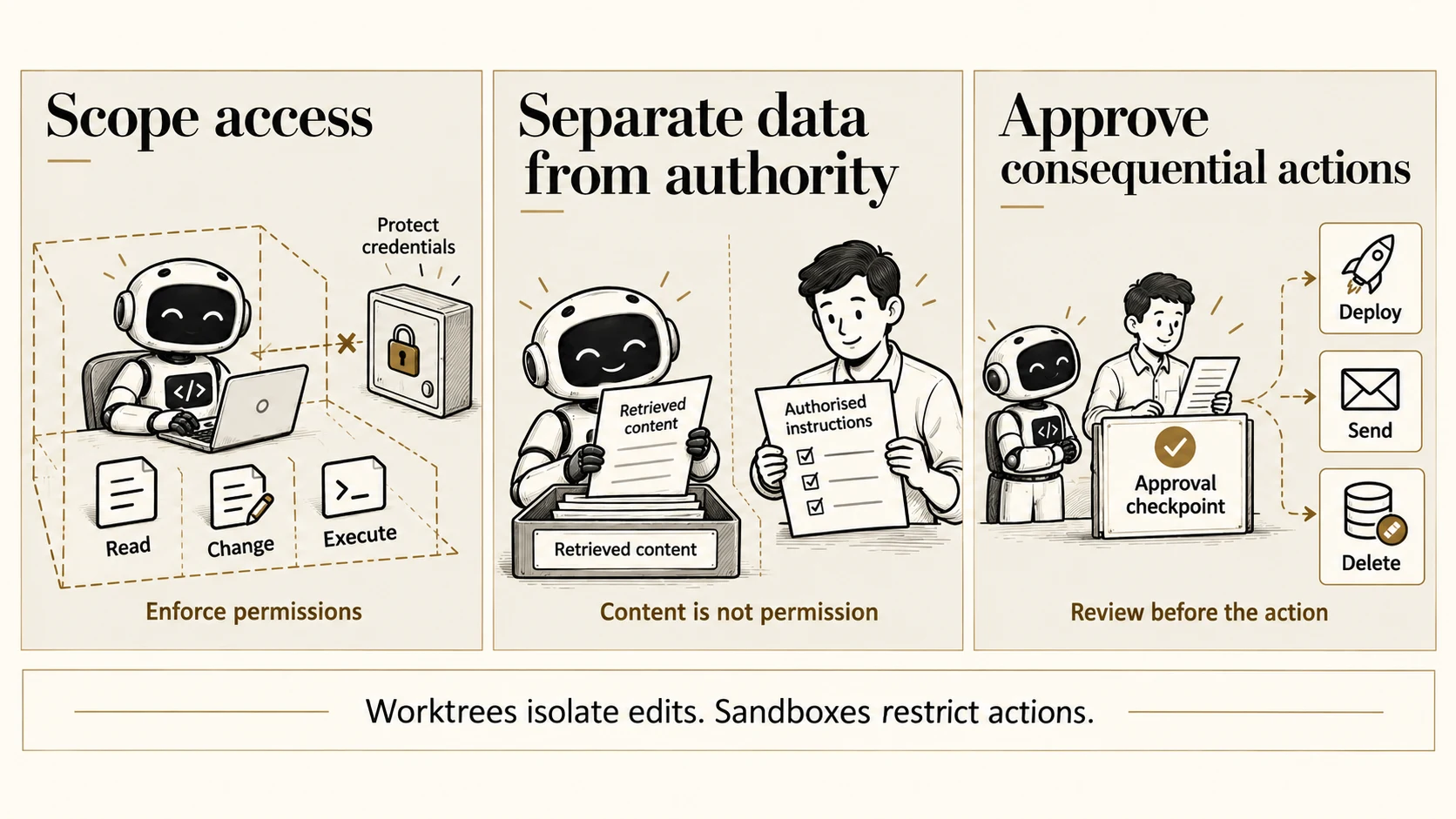
Sources: Git worktrees · OWASP Excessive agency · Prompt injection.
Access
Allow only the files, tools, network access, and credentials needed for the task. Enforce the limits outside the prompt.
Authority
Treat retrieved content as data. It cannot grant permissions or override authorised instructions.
Approval
Agree the actions that need approval, and place the checkpoint before their real effects.
Worktrees isolate edits; they do not contain actions. Use a sandbox with enforced access limits.
Sources: Git worktrees · OWASP Excessive agency · Prompt injection.
Fast feedback beats orchestration.


The harness
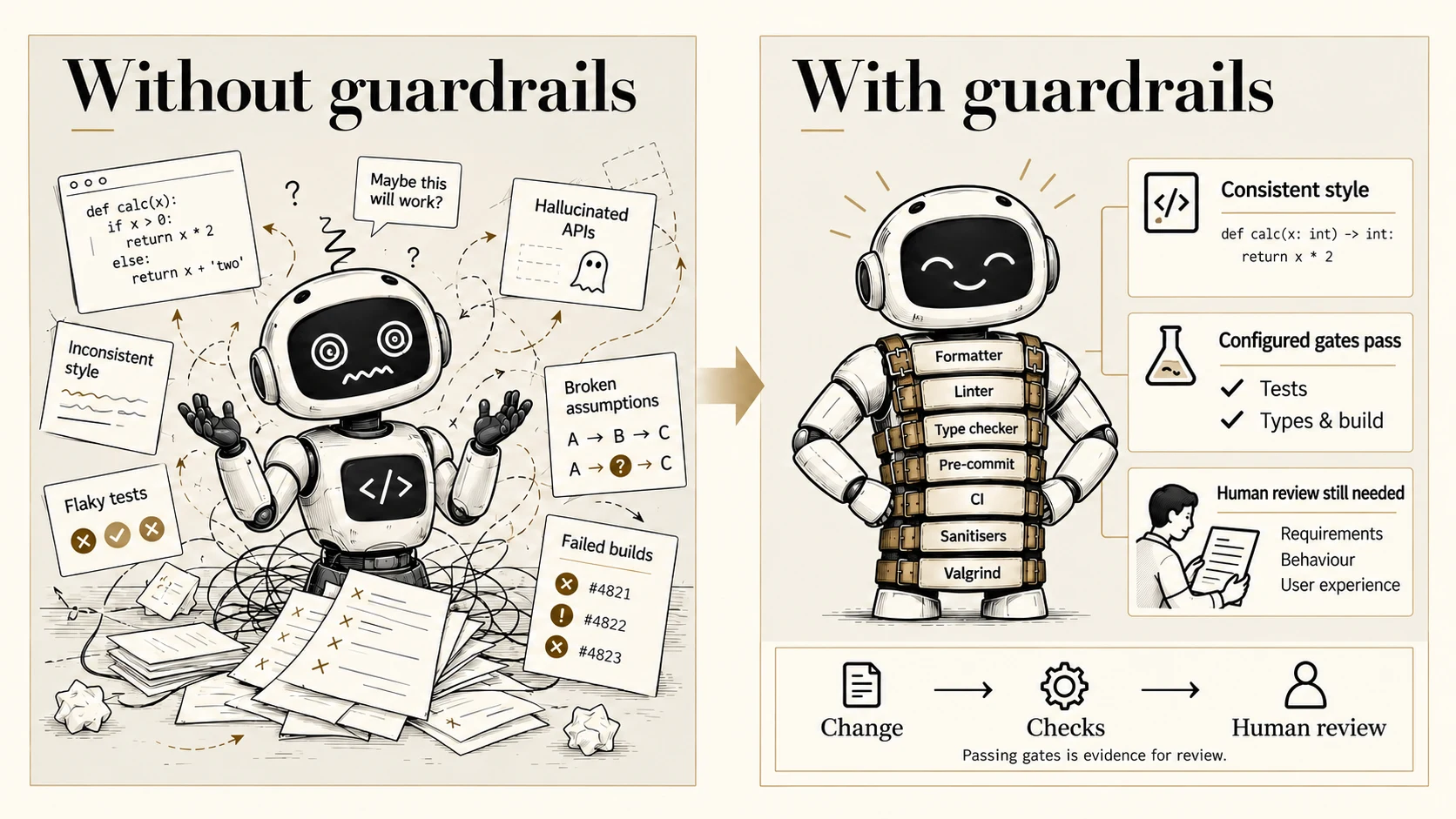
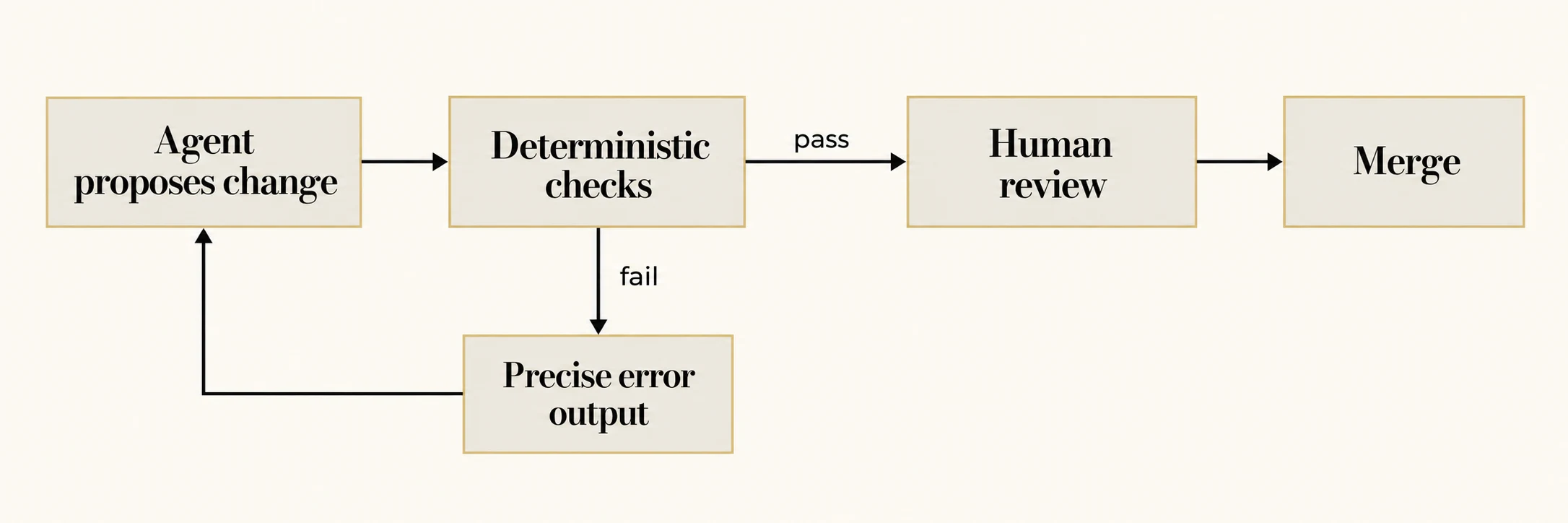
Formatters, linters, type checkers, behaviour-focused tests, Git hooks, and security scans
One command
make qa checks the agreed gates, and CI runs the same gates. Review checks whether we solved the right problem.
Agents optimise for green
Never weaken a check merely to get there. Repairing a wrong gate is deliberate, reviewed work.
See also Harness engineering for coding agent users (Böckeler, martinfowler.com).
Coherent context beats haunted context.
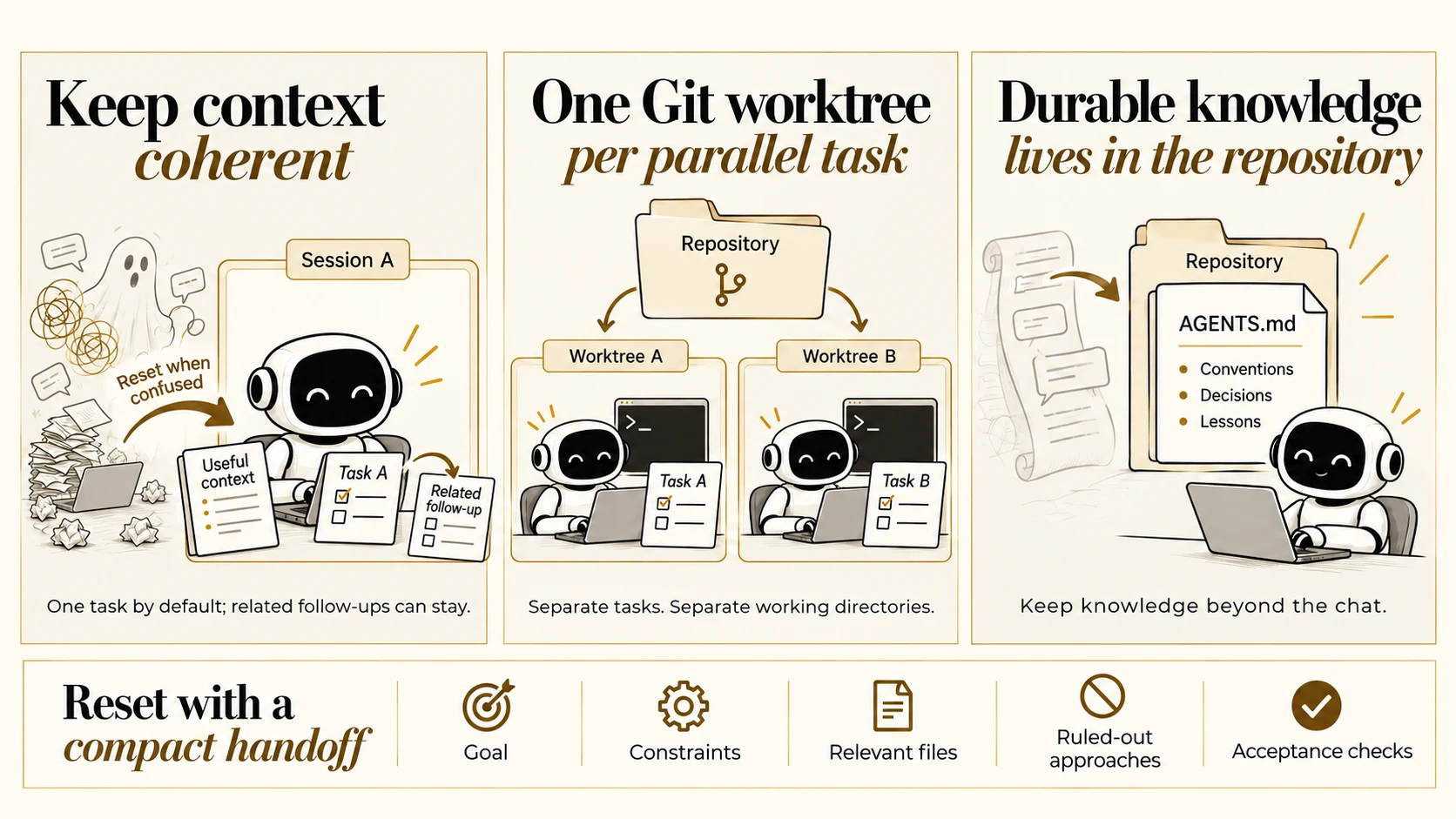
Sources: Context engineering and Claude Code best practices (Anthropic) · Git worktrees.
Sometimes the unlock is a hidden tool affordance.
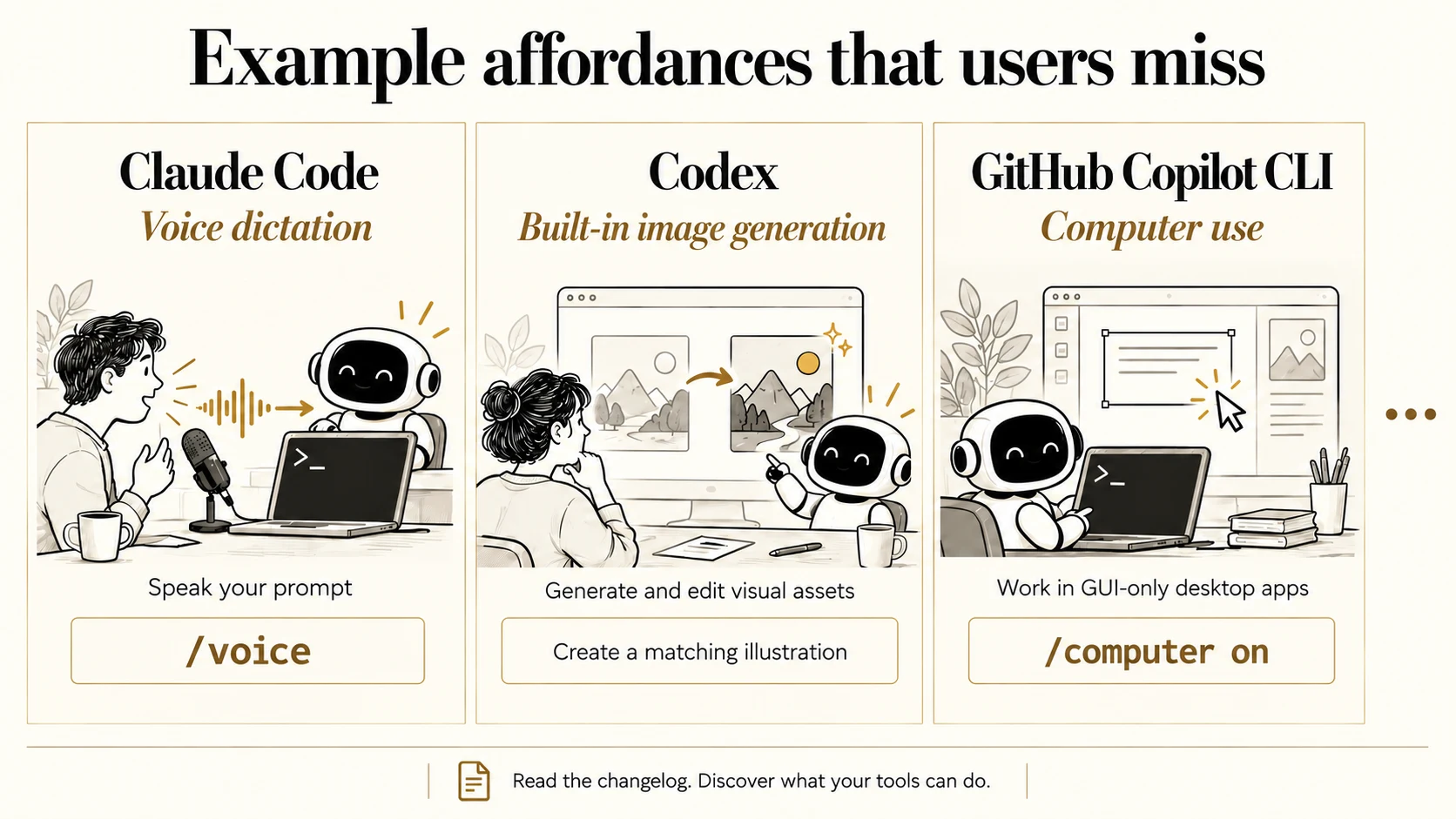
Official docs: Claude Code voice · Codex images · Copilot CLI computer use.
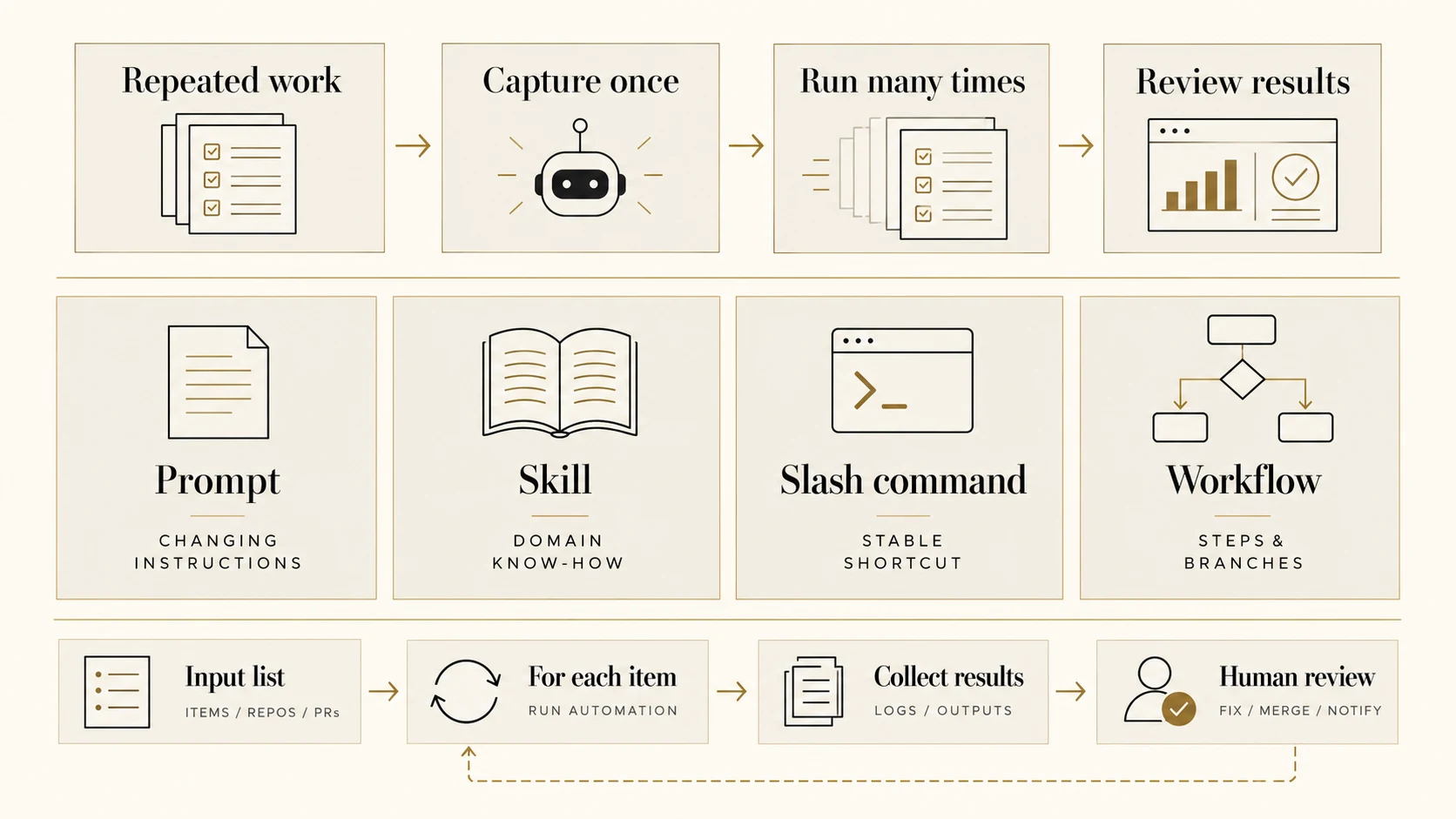
Automate repeated agent choreography.

Prompts, skills, shortcuts, and workflows turn repeated work into reusable automation.
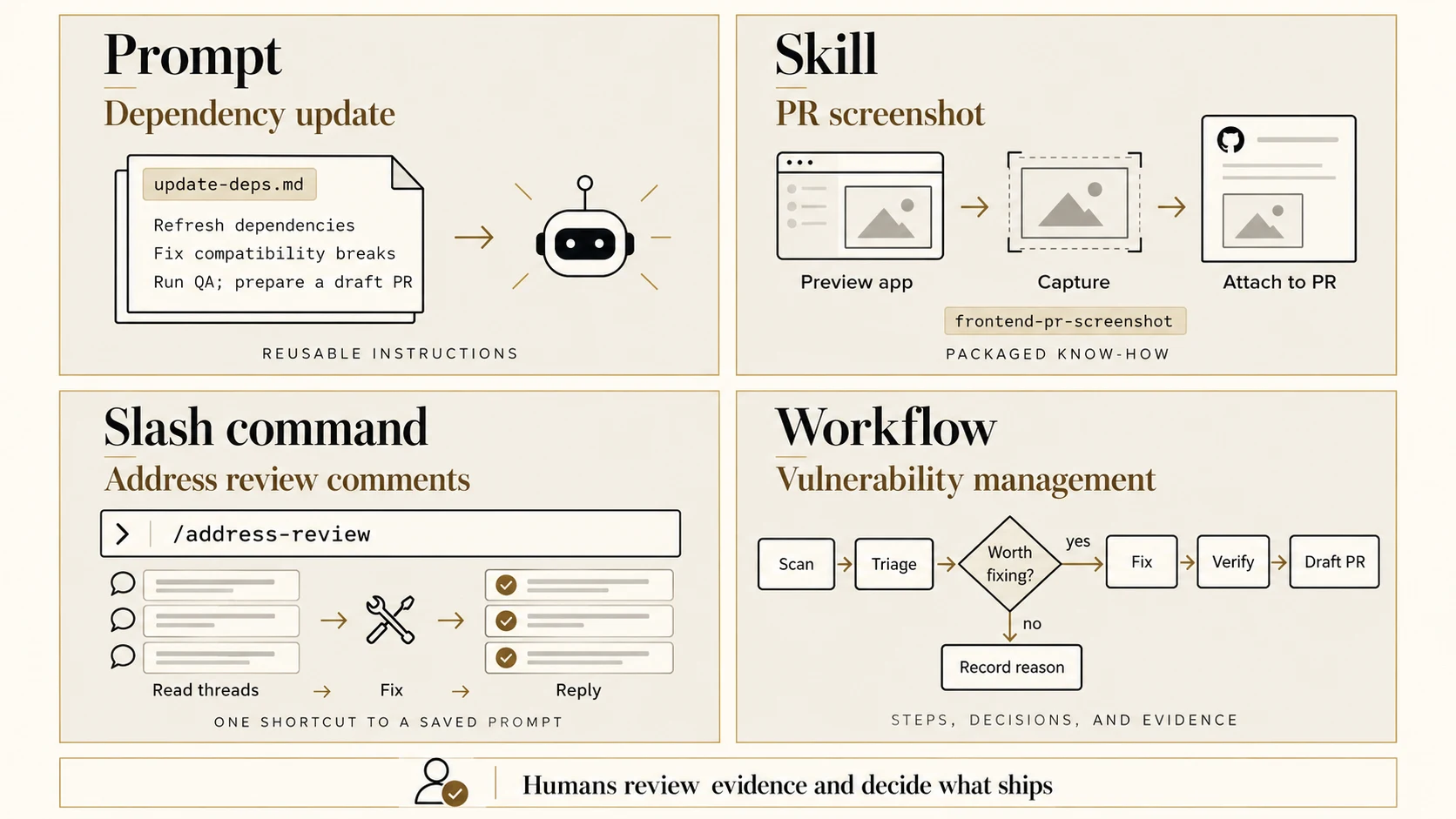
Examples adapted from chatbot-template prompts and its PR screenshot skill.
AI is not an excuse to become incompetent or disagreeable.
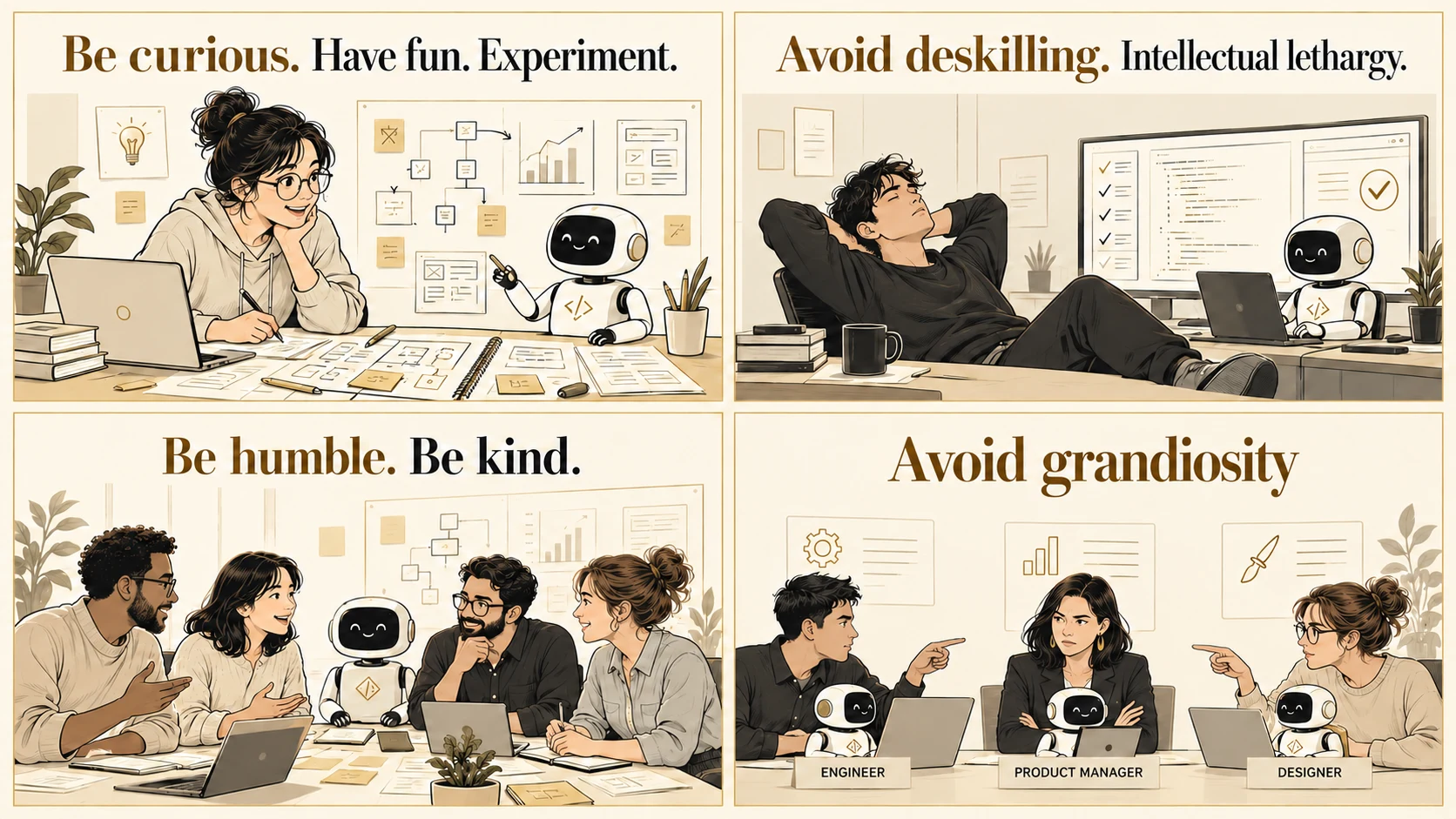
Curious
Experiment, prototype, and keep learning the fundamentals the agent is standing on.
Humble
Agents are confidently wrong. So are we. Verify before you trust, including your own prompt.
Kind
Review agent-generated work as carefully as human work, and review humans as kindly as ever.
AI does not remove responsibility. You still own the design, the code, the tests, the security implications, and the communication with your team.
Everything around it needs planning, especially in teams.
Share
Pool your team’s tips and tricks for agentic coding. Someone has already solved your annoyance.
Fix pain points
Pick a real pain point (slow tests, unclear setup, flaky workflows). Use the simplest effective approach, and measure the whole job.
Frontload planning
Task division, coordination, and reviewability matter more when everyone has an agent.
Challenge your habits
Revisit your workflow as tools change. Keep changes that improve the outcome.
Simplest-solution principle: Building effective agents (Anthropic).
Willison, S. Agentic Engineering Patterns.
Anthropic. Building effective agents.
Anthropic. Effective context engineering for AI agents.
Anthropic. Claude Code best practices.
Böckeler, B. Harness engineering for coding agent users. martinfowler.com.
Lopopolo, R. Harness engineering: leveraging Codex in an agent-first world. OpenAI.
Beck, K. Augmented coding: beyond the vibes.
Anthropic. Demystifying evals for AI agents.
OWASP. Excessive agency and Prompt injection.
Git. git-worktree manual.
AGENTS.md: a simple, open format for guiding coding agents.
Go forth and delegate responsibly.
Check out my other slide decks on software development best practices